

Overview
Join us for a candid breakfast roundtable with CTOs who’ve shipped and scaled real products — sharing the hard truths on where vibecoded apps break, what technical debt really costs, and how non-technical founders can make smart infrastructure decisions.
🎤 Keynote Speaker: Liyana Sulaiman, Co-founder & CPTO of Pollen — a founder-operator who’s been building and scaling software products across Asia for over a decade.
What you’ll walk away with:
— Where AI-built code holds up and where it falls apart at scale
— The decisions that matter before your MVP becomes business-critical
— What to know before hiring, outsourcing, or going all-in on AI coding tools
— Real Q&A with CTOs who’ve seen the failure modes firsthand
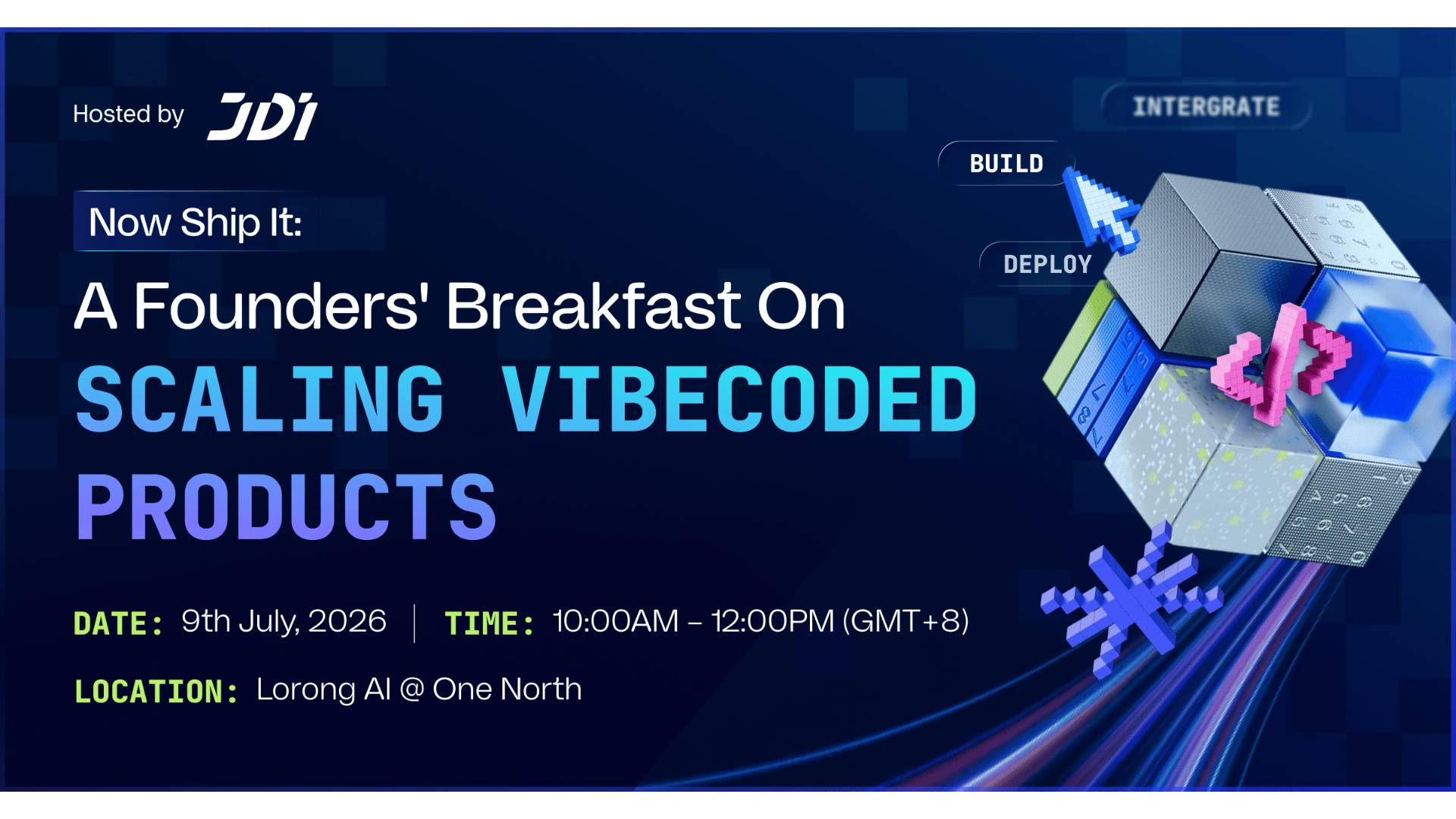
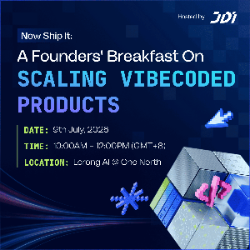
Now Ship It: A Founders’ Breakfast on Scaling Vibecoded Products
You built it with vibes. Now what?
A candid breakfast roundtable for 20 revenue-stage vibecoder founders navigating the messy leap from working prototype to scaled production.
Three CTOs who’ve shipped and scaled real products will share the hard truths: where vibecoded apps break, what technical debt actually costs you, and how non-technical founders can make smart infrastructure decisions without learning to code.
This isn’t a pitch session. It’s a small-room, off-the-record conversation over coffee and food, the kind of advice you’d want from a technical co-founder you trust.
Keynote Speaker Liyana Sulaiman is the Co-founder and CPTO of Pollen, a controlled recovery platform for excess inventory that uses AI to help brands recover more value instead of writing it off.
Li has spent over a decade building and scaling software products across Asia, including co-founding and exiting Gimmie, a VC-backed B2B digital loyalty and gamification platform. Today, she leads product and technology at Pollen, where her work spans AI systems, enterprise workflows, platform and marketplace infrastructure, and operational decision-making.
She brings a practical founder-operator perspective on the messy middle between AI-built MVPs and production-grade software — and on how teams can turn emerging AI capabilities into reliable, scalable business systems.
What to expect:
— Honest takes on where AI-built code holds up and where it falls apart at scale
— The product and infrastructure decisions that matter before your MVP becomes business-critical
— How to identify whether your prototype has product-grade foundations or hidden architectural debt
— What founders should know before hiring, outsourcing, or relying heavily on AI coding tools
— Q&A with CTOs who’ve seen the failure modes firsthand
What happens next: An optional paid PRD Drafting Workshop hosted by JDI, a hands-on session to help you translate your product vision into a structured spec that engineers (and AI tools) can actually build from.
Details: 📍 Lorong AI @ One North
🗓 9th July · 10:00 AM – 12:00 PM
🍳 Breakfast provided
👥 Limited to 20 founders
This is a curated, invite-only gathering. Spots are limited.
🤝 About the Organisers
🏢 JDI Group
JDI Group is a Venture Catalyst driving forward the future of innovation. Since 2016, we’ve jump-started the exponential growth of innovative companies – from FinTech and e-commerce to education and enterprise technology. We empower startups and enterprises with strategic knowledge and resources to scale disruptive innovation from Asia to the world.
🏢 Techies
We are a 3rd space for devs, dev adjacent and people who want to get deep into technical conversations
Schedule
Date: 09 Jul 2026, Thursday
Time: 10:00 AM - 12:00 PM (GMT +8:00) Kuala Lumpur, Singapore
Location: Lorong AI @ One-North, 139961
Speakers
Speaker's Profile:
Liyana Sulaiman, CPTO, Pollen
Liyana Sulaiman is the Co-founder and CPTO of Pollen, a controlled recovery platform for excess inventory that uses AI to help brands recover more value instead of writing it off. Li has spent over a decade building and scaling software products across Asia, including co-founding and exiting Gimmie, a VC-backed B2B digital loyalty and gamification platform. Today, she leads product and technology at Pollen, where her work spans AI systems, enterprise workflows, platform and marketplace infrastructure, and operational decision-making. She brings a practical founder-operator perspective on the messy middle between AI-built MVPs and production-grade software and on how teams can turn emerging AI capabilities into reliable, scalable business systems.