

Overview
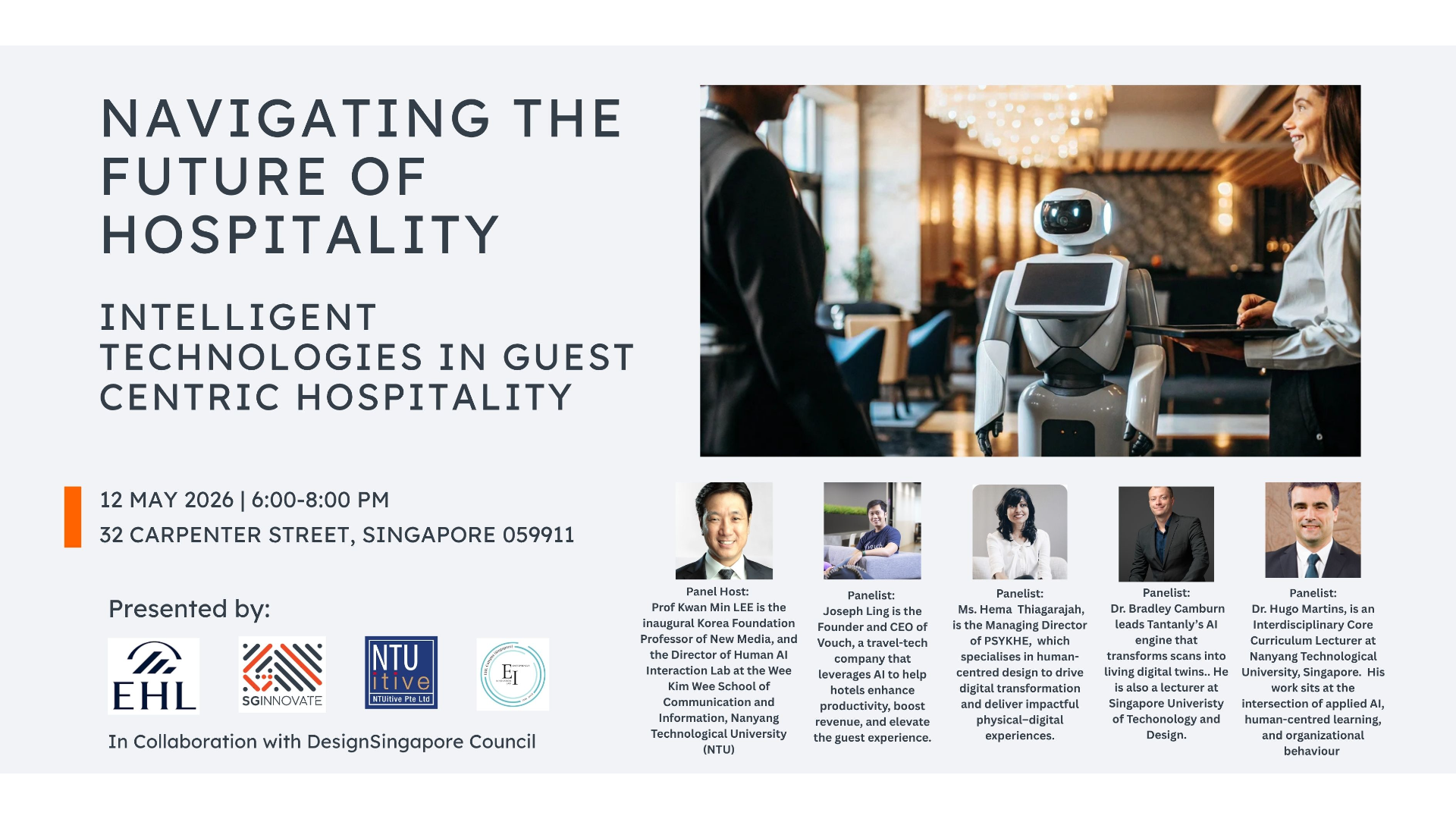
What does the future of hospitality look like when spaces think, systems learn, and experiences adapt in real time?
Join leading voices from design, AI, and innovation as they unpack how generative AI, spatial intelligence, and smart technologies are transforming guest experiences across hotels, airports, attractions, and beyond. From hyper-personalization and seamless journeys to predictive operations and intelligent environments, discover how the industry is redefining what it means to be truly guest-centric.
Be part of this dynamic conversation on how to harness cutting-edge technology while preserving the human touch—because the future of hospitality isn’t just smart, it’s meaningful, intuitive, and trusted.
As hospitality evolves beyond traditional settings into airports, attractions, healthcare, and wellness environments, the convergence of intelligent technologies—particularly generative AI, spatial computing, and data-driven systems—is transforming how experiences are designed, delivered, and optimised.
This panel brings together leaders across experience design, AI-enabled guest engagement, spatial intelligence, and human-centred innovation to explore how organisations can harness these technologies to create environments that are not only efficient and adaptive, but also human-centred, intuitive, meaningful, and trusted. The discussion will examine how to balance personalisation, operational performance, and responsible AI adoption, while ensuring that technology enhances—rather than detracts from—the guest experience.
Schedule
Date: 12 May 2026, Tuesday
Time: 6:00 PM - 8:00 PM (GMT +8:00) Kuala Lumpur, Singapore
Location: 32 Carpenter Street, 059911
Speakers
Moderator's Profile:
Kwan Min LEE, Professor, Nanyang Technological University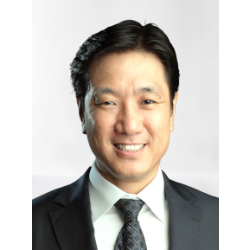
Kwan Min Lee (PhD, Stanford) is the inaugural Korea Foundation Professor of New Media and Director of the Human AI Interaction Lab at the Wee Kim Wee School of Communication and Information, Nanyang Technological University (NTU). He was previously WCU Professor and founding director of the Interaction Science Research Center at Sungkyunkwan University, and one of the youngest Vice Presidents at Samsung Electronics, where he led the User Experience (UX) Group and Creative Lab (C-Lab). Prior to this, he was a tenured professor at the University of Southern California (USC) for 12 years. His expertise spans UX design, human–AI interaction, and the social and psychological impacts of information and communication technologies. He has secured over US$12 million in research funding, holds multiple international patents, and advises both global corporations and startups.
Speaker's Profile:
Joseph Ling, CEO, Vouch Concierge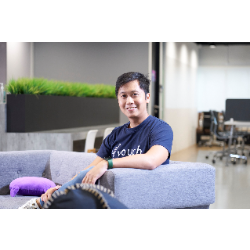
Joseph Ling is the Founder and CEO of Vouch (www.vouchconcierge.com), a travel-tech company that leverages AI to help hotels enhance productivity, boost revenue, and elevate the guest experience. Trusted by major international hotel groups including Accor, Hyatt, and IHG, Vouch’s solutions—ranging from AI-powered concierge systems to contactless check-in and digital guest engagement platforms—are deployed across thousands of rooms in Asia Pacific. A former government scholar, Joseph holds a double degree in Electrical Engineering and Economics from the National University of Singapore, and previously worked in the Innovation and Startups Group at Enterprise Singapore. Outside of work, he enjoys experimenting with smart home technology and spending time with his four young children.
Speaker's Profile:
Hema Thiagarajah, Managing Director, PSYKHE
Hema Thiagarajah has over 18 years of experience at the intersection of consumer behaviour, technology, and business, specialising in driving digital transformation through human-centred design, creative collaboration, and ethnographic research. She has led digital, e-commerce, and physical–digital experience strategies for brands across Asia Pacific. Prior to founding Psykhe, Hema was a founding member of Deloitte Digital Southeast Asia, where she helped establish and launch the Deloitte Digital brand in the region. She has also served as an Adjunct Lecturer at the National University of Singapore, teaching Service Innovation and Design. Her work spans financial services (Standard Chartered, Mastercard ANZ, DBS, UOB, OCBC), consumer and hospitality brands (Chanel, Pan Pacific Hotels Group, CapitaLand, Mandai Wildlife Reserves), and public sector agencies including the Singapore Tourism Board, Housing & Development Board, and Economic Development Board.
Speaker's Profile:
Bradley Camburn, Chief Technology Officer & Co-Founder, Tantanly
Dr Brad Camburn’s research focuses on leveraging AI to enhance physics-based simulation for design, with over 50 peer-reviewed publications and key contributions to design science, particularly in ideation and prototyping. He currently leads Tantanly’s technology vision, driving the development of TwinVision—an AI engine that transforms scans into living digital twins. He brings over 15 years of experience in systems engineering, physics simulation, and 3D modelling. Prior to this, he served as CTO at Gilmour Space Technologies, leading R&D to develop the world’s largest single-port hydrogen peroxide hybrid rocket engine. He was also an Assistant Professor at Oregon State University (2019–2023) and has held research roles at the Singapore University of Technology and Design and the MIT International Design Centre. He holds a PhD from the University of Texas and a bachelor’s degree from Carnegie Mellon University, both in Mechanical Engineering.
Speaker's Profile:
Hugo Martins, Lecturer, Nanyang Technological University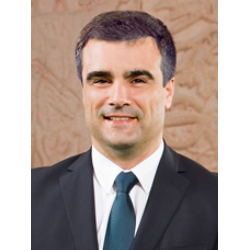
Hugo Martins, PhD in Management (Organisational Behaviour), is an Interdisciplinary Core Curriculum Lecturer at Nanyang Technological University, Singapore, where he teaches Science and Technology for Humanity. His work sits at the intersection of applied AI, human-centred learning, and organisational behaviour, with a focus on how intelligent systems are reshaping work design, business processes, and human performance. Drawing on experience across both industry and academia, he brings a practice-informed perspective to authentic problem solving and interdisciplinary learning. His interests centre on the responsible design of human–AI systems that augment rather than replace human capability, with an emphasis on AI readiness, adaptability, and real-world application in organisational contexts.