

Overview
The 3rd edition of the Healthcare AI (HAI) Symposium returns to Singapore from 8–10 July 2026, convening the healthcare innovation ecosystem to exchange ideas, forge collaborations, and connect across disciplines. This year’s symposium is dedicated to “Designing the Future of Intelligent Health: Advancing Healthcare Through AI, MedTech and Digital Systems.”
Join us to explore the latest developments in AI, MedTech, and digital healthcare, alongside policymakers, healthcare professionals, academics, investors, and industry leaders, as we shape the future of intelligent health together.
Schedule
End Date: 10 Jul 2026, Friday
This is a 2 full-day conference, and a 1 full-day Masterclass (limited slots only).
Location: Singapore, SingaporeSpeakers
Speaker's Profile:
Nigam H. Shah, Chief Data Scientist, Stanford Health Care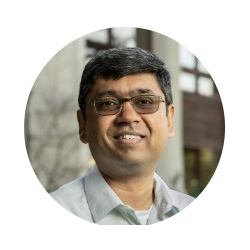
Dr. Nigam Shah is Professor of Medicine at Stanford University and Chief Data Scientist for Stanford Health Care. He is a world-renowned scientist and entrepreneur with deep expertise in applying machine learning and artificial intelligence (AI) to analyse diverse health data, including electronic health records, claims, and wearables. In his Chief Data Scientist role, he oversees the responsible use of AI for advancing disease understanding and improving clinical care delivery across Stanford Health Care. In 2018, he created the USA's only bedside consultation service, to provide clinicians with on-demand patient outcome summaries. This service was cited in Congressional testimony and was spun out as the independent company Atropos Health in 2021. Shah's research is highly influential, with over 350 publications (h-index 94) in journals such as JAMA and the New England Journal of Medicine, receiving over 43,000 citations.
Speaker's Profile:
Robert Morris, Chief Technology Strategist and Head (Data, Science & Technology), MOH Office for Healthcare Transformation
Robert is the Chief Technology Strategist at MOHT, where he anchors the Data and Technology Enablers. He concurrently serves as Professor at the Yong Loo Lin School of Medicine, National University of Singapore, and as Executive Director of the Singapore Medical Foundation AI model (SIMFONI) Programme under the Consortium for Clinical Research and Innovation, Singapore. His current focus is on the application of computer and information sciences, including AI, to transform healthcare. Until 2017, Robert led all of IBM Research’s Global Laboratories. Prior to that, Robert was also head of the IBM Almaden Research Center (Silicon Valley), where relational database technology and the disk drive were invented. During this time, he led the creation of Services Science, Research for IBM’s ThinkPad, and Storage Systems. Earlier he also led advanced systems research at TJ Watson Center (New York), including the Deep Blue chess machine, which defeated world champion Garry Kasparov in 1997.
Speaker's Profile:
Rick Goh, Department Director of Computing and Intelligence, A*STAR Institute of High Performance Computing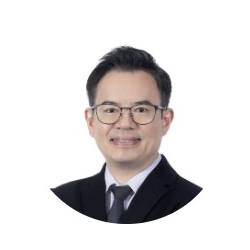
Dr. Rick Goh is the Director of Computing & Intelligence Department at A*STAR Institute of High Performance Computing (A*STAR IHPC), an Adj. Assoc. Professor at Duke-NUS Medical School, Adj. Senior Principal Investigator at Singapore Eye Research Institute (SERI), Co-Director of both A*STAR-EVYD Joint Lab and SERI-IHPC Joint Lab. He chaired the organising committee of HPC AI Innovation Challenge 2023-2024, organised by National Supercomputing Centre (NSCC), AI Singapore (AISG), and Infocomm Media Development Authority (IMDA). Leading a team of 80 scientists and engineers, Dr. Goh focuses on world-leading scientific research, advancing technology commercialisation, and fostering industry collaborations. His dept specialises in Artificial Intelligence & Advanced Computing, including high performance computing using GPUs, FPGAs, quantum technologies, and decentralised computing like blockchain, secure multi-party computation and privacy-preserving federated learning.