


Overview
What does it really take to build AI that can operate in the physical world? Robotics and AI have long promised intelligent machines, but most AI today is confined to digital environments.
Professor Henrik I Christensen (Professor, UC San Diego) will explore why we're now at a unique confluence where advances in physics simulation, computational power, and optimization techniques are finally making embodied AI feasible at scale.
Examine the practical engineering challenges of how AI integrates with classical control theory, sensor fusion, and mechanical design to reason and act in three-dimensional space.
Through examples from current research and his experience co-founding six companies and editing the US National Robotics Roadmap, learn to distinguish genuine breakthroughs from technical hurdles and understand the real possibilities for intelligent physical systems.
More About the Series
Praxis is a focused technical sharing series built around researcher-driven discussions on advanced AI and applied research topics.
Schedule
Date: 27 Mar 2026, Friday
Time: 12:00 PM - 1:30 PM (GMT +8:00) Kuala Lumpur, Singapore
Location: Lorong AI @ One-North, 69 Ayer Rajah Cres., Singapore 139961
Speakers
Speaker's Profile:
Henrik Christensen , Distinguished Professor, UC San Diego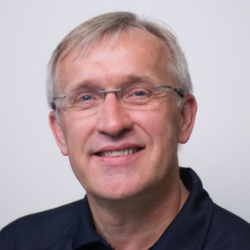
Henrik Christensen is the Inaugural Temasek Fellow and a distinguished professor of Computer Science at UC San Diego. His research sits at the intersection of robotics, perception and AI. He has co-founded six companies and serves as the main editor of the US National Robotics Roadmap published every four years. With over 400 published papers and numerous awards, he brings decades of experience bridging academic research with real-world robotics applications.