



Overview
Partnership Between SIT and IESA Academy:
Explore key frameworks, standards, and methodologies used in sustainability reporting and impact assessment.
Learners will examine both Singapore and global approaches to sustainability reporting, with a focus on regulations, best practices, and emerging trends in corporate transparency.
This module enables learners to critically evaluate sustainability reports, understand the impact of reporting on organisational performance, and apply reporting standards in practical scenarios.
This module is part of the Graduate Certificate in Sustainability Principles and Practices (GCert in Sust PP) and supports the Chartered Engineer (SG) in Sustainability Sector Certification Programme by IES. It is mapped to IES CEng (Sustainability) Module – CM3: Sustainability Reporting.
Who Should Attend
Learners who are seeking to enhance their expertise in environmental sustainability across diverse industry sectors, including sustainability officers, policymakers, managers, and business owners.
Course Description & Learning Outcomes
Introduction to Sustainability Reporting
Understand the purpose, history, and significance in corporate and public sectors
Global Sustainability Reporting Standards
Acquire an understanding of the Global Reporting Initiative (GRI), Sustainability Accounting Standards Board (SASB), Task Force on Climate-related Financial Disclosures (TCFD), and Integrated Reporting (IR)
Singapore’s Sustainability Reporting Landscape
Examine local regulations and guidelines, including those by the Singapore Exchange (SGX)
Environmental, Social, and Governance (ESG) Reporting
Understand the key components of ESG reporting and their relevance to sustainability and communication with stakeholders and the public
Data Collection and Metrics
Learn the methods for collecting, measuring, and reporting on sustainability metrics
Comparative Analysis of Sustainability Reports
Analyse case studies of corporate reports from Singapore and international companies
Challenges in Sustainability Reporting
Discuss various issues such as greenwashing, transparency, and data reliability
Future of Sustainability Reporting
Learn emerging trends, technological innovations, and the impact of global standards on reporting practices
Recommended Prerequisites
For learners who are not pursuing CEng (Sustainability):
A Bachelor's degree from a recognised university
For learners who are pursuing the Chartered Engineer (SG) in Sustainability Sector Certification Programme (CEng (Sustainability)) by IES:
Washington Accord Degree or equivalent academic programme recognized by Professional Engineers Board (PEB)
Minimum 4 years of working experience (in any field) as Engineer
Learners should review the pre-requisites and register directly with IES Chartered Engineering Board for the CEng (Sustainability) certification. For more information, please visit IES Chartered Engineering Board website: https://cebsg.org/chartered-engineer-sg-in-sustainability-sector-certification-programme-2/

Schedule
End Date: 25 Sep 2026, Friday
3 sessions (9am - 6pm): 11, 18, 25 September 2026
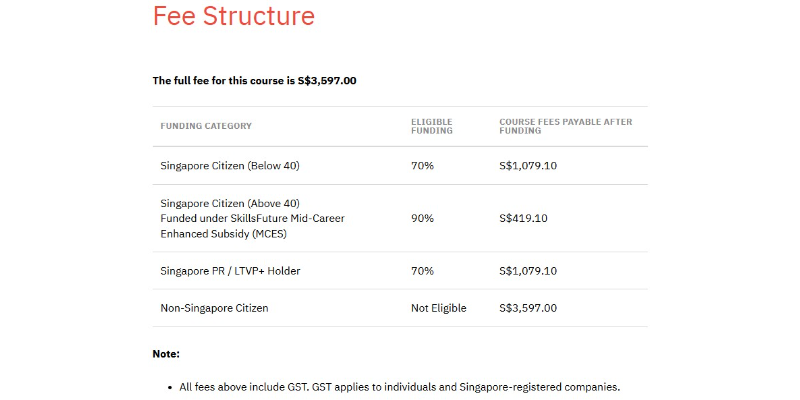
Location: 80 Jurong East Street 21, #04-10, Devan Nair Institute For Employment and Employability, Singapore., 609607Pricing
Skills Covered
PROFICIENCY LEVEL GUIDE
Beginner: Introduce the subject matter without the need to have any prerequisites.
Proficient: Requires learners to have prior knowledge of the subject.
Expert: Involves advanced and more complex understanding of the subject.
- Basic Engineering Knowledge (Proficiency level: Beginner)
- Data Analytics (Proficiency level: Beginner)
Speakers
Trainer's Profile:
Dr. Kevin Ow Yong, Associate Professor, Singapore Institute of Technology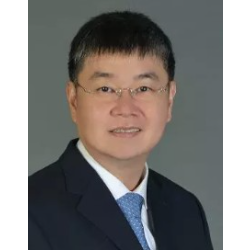
Dr. Kevin Ow Yong is an Associate Professor of Accounting at the Singapore Institute of Technology. He holds a First Class Honours Degree (with a University Medal) in Accounting from Nanyang Technological University and received his PhD degree from Duke University. He has previously worked at Peking University as an associate professor, Singapore Management University as an assistant professor, and Singapore Airlines as a regional accountant and financial analyst. Dr. Ow Yong has been a Chartered Accountant (CA) and Certified Public Accountant (CPA) since 2003 as well as a Chartered Financial Analyst (CFA) since 2002. He currently sits on the IS Chartered Accountant Journal Editorial Advisory Panel. He is also a member of the UAFRS Advisory Council with Valens Research. He has previously served on the Candidate Programmes Committee with the CFA Society (Singapore) and was on the advisory board with Brahm Centre, a non-profit charity organisation as their finance advisor.
Trainer's Profile:
Yeap Lay Huay, Senior Lecturer, Singapore Institute of Technology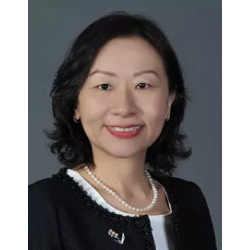
Yeap Lay Huay is a Senior Lecturer in the Accountancy Program at the Singapore Institute of Technology. With over 15 years of industry experience in financial institutions and public accounting firms, she brings a wealth of practical knowledge to her academic role. Her last corporate position was Vice President of Finance at Barclays Bank, where she led teams across Singapore, Hong Kong and India to provide decision support to APAC Senior Management through performance reporting, budgeting, and strategic planning. Currently, she is pursuing part-time PhD studies at an Australian university, focusing on auditors’ reporting. Her research interests also include corporate governance, risk management, and sustainability reporting. She currently serves in SIT’s Sustainability Education Committee and Applied Learning and Innovation Grant Evaluation Panel.
Trainer's Profile:
Nancy Shen, Sustainability Consultant, Founder /Principal Consultant, ESG & Biz Solutions Pte Ltd
Nancy Shen is a sustainability and ESG expert with deep experience in both corporate consulting and academic training, with more than 15 years management system auditing experience. She has successfully delivered ESG and carbon reporting training to corporate teams and has been engaged as a lecturer at leading institutions including the National University of Singapore (NUS), Nanyang Technological University (NTU), James Cook University, and the University of Newcastle (Australia). Her teaching focuses on sustainability strategy, climate-related disclosures, ESG reporting frameworks, and carbon footprint management, with a practical lens drawn from industry best practices. As a consultant, Nancy has led numerous ESG reporting and awareness-building projects across a wide range of sectors—including shipping, logistics, energy, transportation, mining, construction, and consumer services. She specializes in aligning companies with global reporting standards.