


Overview
Note: Due to limited capacity for this session, all registrations are subject to final approval. Please look out for a confirmation of registration which will be sent directly to your email. (Only participants who have received this confirmation will be able to attend this Tech Talk).
By registering for this session, you consent to the collection, use, and disclosure of your personal data by the organising partners, including SGInnovate and Fraunhofer, for the purposes of event administration, communication, and related follow-up activities.
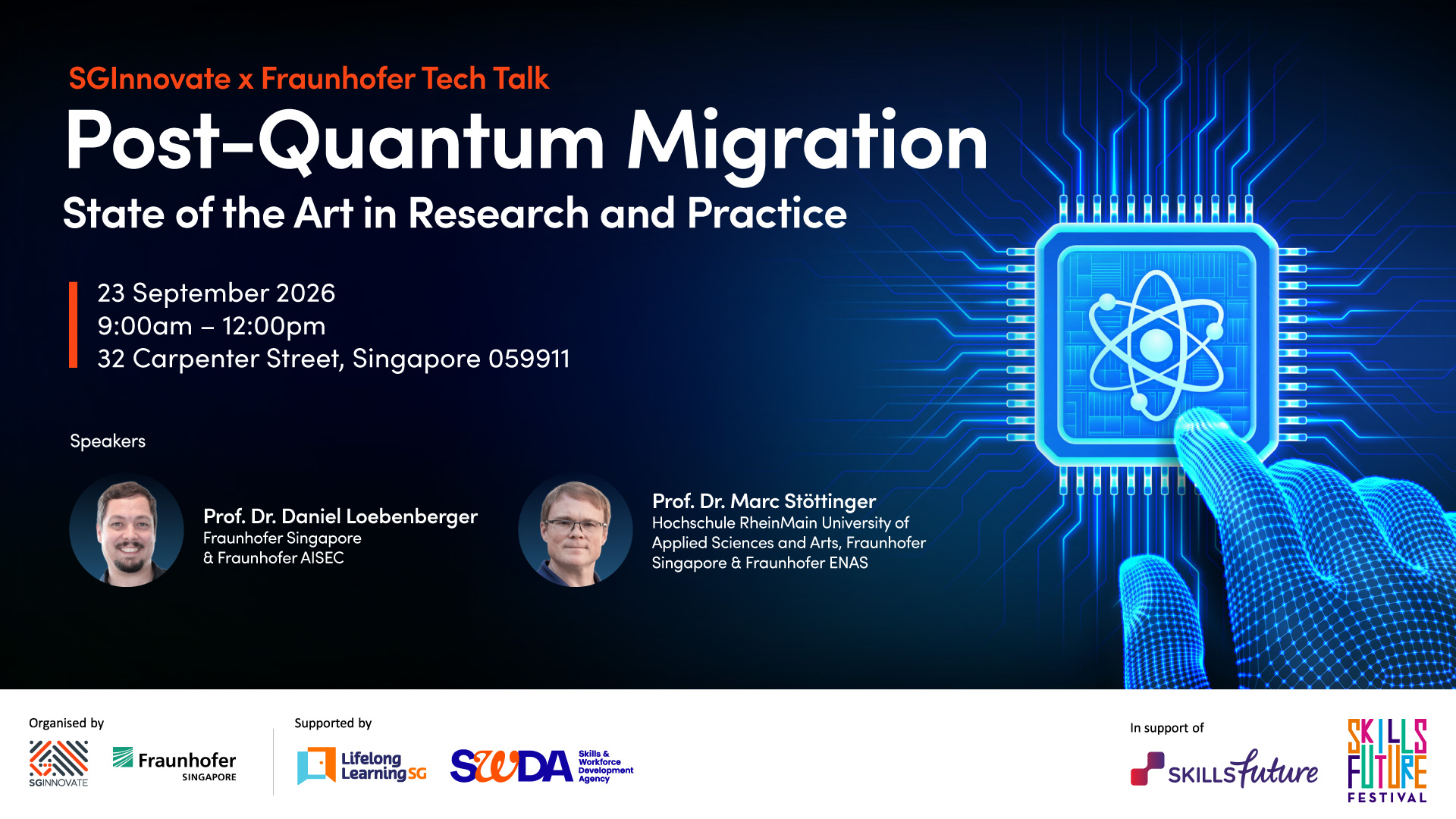
Join us for this Tech Talk for Leaders, a part of SGInnovate's Let's Tech It series—an exciting session where innovation meets practical application.
In this session, we'll explore the current state of research and practice in cryptographic migration and agility, and take a technical deep dive into migration frameworks, cryptographic inventories, dependency analysis and formal transition models. We'll also discuss the gap that still separates migration plans from executable migration paths, providing insights into the capabilities organisations need to close it.
Course Description & Learning Outcomes
Tech Talk Description and Learning Outcomes
Post-quantum cryptographic standards are now available, but replacing algorithms is only one part of the transition. Real infrastructures contain distributed dependencies, long-lived data, hardware constraints, protocol interactions, legacy components and organisational boundaries that make cryptographic migration a system-level challenge. This Tech Talk presents the current state of research and practice in cryptographic migration and agility. It connects recent standardisation with migration frameworks, cryptographic inventories and CBOMs, dependency analysis, formal migration models, hybrid transition strategies and validation approaches. The speakers will distinguish what is already operationally mature from what remains unresolved, and will show why many organisations still face a substantial gap between migration plans and practical executable migration paths.
The session combines two complementary perspectives. Marc Stöttinger will review and compare prominent post-quantum migration frameworks, their scope and their practical assumptions. Daniel Loebenberger will introduce system-level and formal approaches for representing migration states, dependencies and feasible transition sequences. Together, the speakers will derive a consolidated view of today’s migration landscape and discuss the capabilities organisations need to move from cryptographic discovery to controlled execution.
By the end of this Tech Talk, participants will be able to:
Understand why cryptographic migration is a system-level problem, not an algorithm swap Recognise how distributed dependencies, long-lived data, hardware constraints, protocol interactions, legacy components and organisational boundaries shape the true scope of a quantum-safe transition.
Compare the prominent post-quantum migration frameworks Examine the scope, assumptions and practical limitations of the leading frameworks, and assess which are suited to your own environment.
Build cryptographic visibility through inventories and CBOMs Learn how cryptographic inventories and Cryptographic Bills of Materials support discovery, dependency analysis and ongoing cryptographic agility.
Represent migration states and feasible transition sequences Gain an introduction to system-level and formal modelling approaches for capturing where an organisation stands, what depends on what, and which transition paths are actually viable.
Evaluate hybrid transition and validation strategies Understand how hybrid approaches, staged rollouts and validation methods reduce risk during the migration window.
Distinguish mature practice from open problems Develop a clear-eyed view of what is operationally ready today versus what remains unresolved, and identify the capabilities needed to close the gap between migration plans and executable migration paths.
Recommended Prerequisites
Target Audience
This session is designed for:
Cybersecurity architects, security engineers and cryptographic engineers
CISOs, technology leaders and programme managers responsible for quantum-safe transition
Developers and operators of security-critical software, hardware and infrastructure
Researchers, regulators and practitioners working on post-quantum security or cryptographic agility
Pre-requisites:
Working familiarity with applied cryptography concepts (public-key cryptography, key exchange, digital signatures, PKI)
General awareness of post-quantum cryptography and the recent NIST standardisation outcomes
Practical exposure to enterprise IT or OT infrastructure, software supply chains or security architecture
Schedule
Date: 23 Sep 2026, Wednesday
Time: 9:00 AM - 12:00 PM (GMT +8:00) Kuala Lumpur, Singapore
Location: 32 Carpenter Street, 059911
Agenda
| Day/Time | Agenda Activity/Description |
|---|---|
| 8:45am | Registration begins |
| 9:00am | Tech Talk begins - SGInnovate welcome remarks |
| 9:05am | Review and compare prominent post-quantum migration frameworks, their scope and their practical assumptions. |
| 10:30am | Introduce system-level and formal approaches for representing migration states, dependencies and feasible transition sequences |
| 12:00nn | End of session |
Skills Covered
PROFICIENCY LEVEL GUIDE
Beginner: Introduce the subject matter without the need to have any prerequisites.
Proficient: Requires learners to have prior knowledge of the subject.
Expert: Involves advanced and more complex understanding of the subject.
- Quantum Computing (Proficiency level: Beginner)
Speakers
Trainer's Profile:
Prof. Dr. Daniel Loebenberger, Heads of Secure Infrastructure Department, Fraunhofer Singapore & Fraunhofer AISEC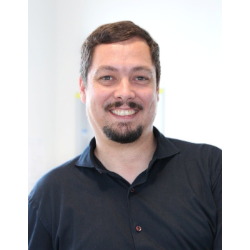
Daniel received his doctorate in cryptography from the University of Bonn in 2012, where he conducted research and taught until the end of 2015. In January 2019, he was appointed Fraunhofer Endowed Professor of Cybersecurity at the Fraunhofer Institute for Applied and Integrated Security AISEC, where he heads the "Secure Infrastructure" department. Professor Loebenberger's resarch focuses on topics of applied post-quantum cryptography and quantum-safe infrastructures. He is currently working on the QUASAR project (25/09–29/03) at the NTU-Fraunhofer Singapore Research Centre at the Nanyang Technological University in Singapore. QUASAR addresses various aspects of applied (post-)quantum technologies and is funded by the National Research Foundation of Singapore.
Trainer's Profile:
Prof. Dr. Marc Stöttinger, Associated researcher at the Fraunhofer Institute for Electronic Nano Systems ENAS, Associated Senior Research Fellow of Fraunhofer Singapore, Hochschule RheinMain University of Applied Sciences and Arts, Fraunhofer Singapore & Fraunhofer ENAS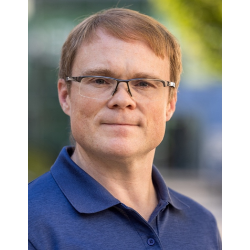
Marc Stöttinger studied electrical engineering and information technology at Technische Universität Darmstadt and received his doctorate there in the field of side-channel analysis and hardware security. From 2012 to 2014 he was deputy research group leader at the PACE Lab of Temasek Laboratories at Nanyang Technological University in Singapore, before spending six years in industry as Senior Expert for Embedded Hardware Cyber Security at Continental AG and, subsequently, as Senior IT Analyst at the Hessen Cyber Competence Center of the Hessian Ministry of the Interior. He is an associated researcher at the Fraunhofer Institute for Electronic Nano Systems ENAS and an Associated Senior Research Fellow of Fraunhofer Singapore. Within the QUASAR project he will also work at the NTU-Fraunhofer Singapore Research Centre at Nanyang Technological University in Singapore, where he focuses primarily on physical attacks against QKD systems.