



Overview
What happens when agentic programming moves from software into robots?
Prof. David Hsu will explore Robot Agentic Programming (RAP), and how the rise of coding agents could reshape the way robot systems are designed, programmed, and deployed in the physical world.
Tracing robotics from the model-driven classical era to today's data-driven deep-learning approaches, he'll argue that the next step may bring these ideas together: combining model-based planning and data-driven learning to develop more generalisable robot capabilities for the open world.
He'll also unpack the key ingredients needed to make this possible, including expressive robot programming interfaces, structured program representations, and interactive environments for program execution and verification, and how robot foundation models could help close the loop from program specification to real-world deployment.
More About the Series
Singapore Embodied AI Colloquium (SEAIC) is a focused technical research series built around researcher-driven discussions and sharing on frontier topics in embodied AI, robot learning, and physical AI.
Schedule
Date: 13 Nov 2026, Friday
Time: 3:00 PM - 5:00 PM (GMT +8:00) Kuala Lumpur, Singapore
Location: Lorong AI @ One-North, 69 Ayer Rajah Cres., Level 3 Vidacity, Singapore , 139961
Speakers
Speaker's Profile:
David Hsu, Chair Professor in the Department of Computer Science, National University of Singapore (NUS)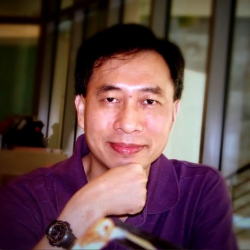
David Hsu is Provost's Chair Professor in the Department of Computer Science at the National University of Singapore (NUS) and Director of the Smart Systems Institute. He holds a BSc in Computer Science and Mathematics from the University of British Columbia and a PhD in Computer Science from Stanford University. At NUS, he co-founded the Advanced Robotics Centre in 2013 and founded the NUS AI Laboratory (NUSAIL) in 2019. An IEEE Fellow, his research spans robotics, artificial intelligence, and computational structural biology, focusing on robot planning under uncertainty, machine learning, and human-robot collaboration. His work has received international recognition, including the RSS Test of Time Award and the IJCAI-JAIR Best Paper Prize. He has also chaired major robotics conferences and served on the editorial boards of leading robotics and AI journals.