

Overview
Singapore's year-end school holidays open with six days inside the companies that build AI.
The 6th Kids AI Industry Immersion Camp runs from 21 to 26 November 2026 at the ACE Ideation Centre @ one-north, with learning journeys into tech and AI native companies across the city. Children aged 7 to 15 — and the parents who want to learn beside them — spend 48.5 supervised hours moving through every stage a startup goes through: the problem, the customer, the product, the price, the launch and the feedback.
Each day has two parts. In the first, children learn and build. In the second, they are with industry: a mentorship round in a small group, a fireside chat with a technology leader, or a visit to a company at work.
By the fifth day each child has a product, a customer in mind, a price and a pitch. By the sixth, they know what it would take to sell it.
This is not a holiday coding class. Confirmed participation for November 2026 includes senior regional leaders from LinkedIn, Microsoft, IBM and Wavestone, a former Intel tech sales leader, and the former Chief Digitalisation and Data Officer of the Republic of Singapore Air Force. Cohorts are capped at 10 to 20 participants so that every child and adult received 1:1 attention and personalised learning.
Four findings shape how this camp is built.
1. Most AI jobs are not developer jobs. PwC's 2026 Global AI Jobs Barometer found that around 82 per cent of AI-related job postings are for AI user roles rather than AI developer roles. The scarce skill is not writing models; it is knowing what to build, judging whether the output is any good, and shipping it to someone who wants it. This is why the camp does not require coding and does not score it. Children work with the tools professionals actually use — Lovable, Google AI Studio, Claude — and are judged on problem fit, whether the product works, responsible AI reasoning, the pitch, and what they learned.
2. The skills themselves are moving. The World Economic Forum's Future of Jobs Report 2025 projects that 39 per cent of workers' existing skill sets will be transformed or become outdated by 2030, with 170 million new roles created and 92 million displaced. Its fastest-growing skill is AI and big data; alongside it rise creative thinking, resilience and flexibility, and curiosity and lifelong learning. A child who learns one tool learns something with a short shelf life. A child who learns to start from a stranger's problem, build, fail, and start again carries a method that outlasts the tool.
3. Singapore's demand is immediate, and visible in the job market. The same PwC analysis found AI's share of Singapore job postings rose to 5.3 per cent in 2025, from 3.3 per cent the year before. Under the National AI Strategy 2.0, Singapore has set out to raise its AI practitioner pool to 15,000 from roughly 4,500, over three to five years. The children in this room will enter that market in the 2030s. Their parents are in it now.
4. There is an agreed international standard for what children should learn about AI, and it is not a coding syllabus. UNESCO's AI Competency Framework for Students, published in 2024, sets out four competencies: a human-centred mindset, the ethics of AI, AI techniques and applications, and AI system design. The camp's six days map onto all four — agency and career imagination on Days 1 and 6, inclusive and responsible design on Day 4, building and agents on Days 1, 2 and 5, and system design across the full product arc from problem to pitch.
What this means for a future-ready child. The programme's claim is deliberately narrow. Six days will not make a child an engineer. What six days can do is move a child from consuming AI to directing it and give them evidence of that shift they can show you: a product they built, a jury card with written feedback, a failure they logged and recovered from, and a conversation they held with a real AI founder and tech executive.
Skills covered
Artificial intelligence literacy — beginner to intermediate
AI agents and vibe coding fundamentals — beginner
Human-centred and inclusive product design — beginner
Product management fundamentals — beginner
Entrepreneurship: founder mindset, business model canvas, lean startup, minimum viable product, sales and go-to-market — beginner
Responsible AI reasoning — beginner
Pitching and communication — beginner to intermediate
By the end of the six days, each participant will have:
Framed a real problem and designed an AI solution for their family, peers or community
Built a working prototype from minimum viable to minimum lovable product
Designed two AI products — one individually, one in a team — each with a customer in mind, a price, and a route to monetising it in 2027
Pitched to an industry jury in a cross-functional team
Learned how products get funded
Logged a failure, taken user feedback, iterated, and shipped again
Networked with global technology executives, Singapore scaleup founders, and solo bootstrapped builders.
Why Kids AI Camps matter - my personal story
I did not come from technology. I spent my early career as a trained secondary school teacher in the resource deprived school, teaching 8th grade students including delinquent kids with police record. Tired of looking for a job after graduation, I self-designed my first remote role as a global development consultant at the age 23 earning 4x above my peers.
After two master’s degrees, joined the World Health Organization, then the World Bank, where I reviewed graduate scholarship applications from 180 countries. That job taught me something I have not been able to put down since - most of what separates people is not ability, but access to quality education and career opportunities. At the age of 25, I came to Singapore for a master's in public policy at the NUS’ Lee Kuan Yew School, and at 37 started again from zero, in tech, with no technical background.
What I know about tech, startups, products, and hackathons, I learned by building. At Microsoft, I led Future Ready Skills portfolio across Asia-Pacific and built AI for Good hackathons for children and educators in 10 markets. I reshaped the way Microsoft run hackathons, and for the first time in 3 years, Asian developing countries as Indonesia, Nepal, Philippines, and Vietnam joined the global top 10. It became the best use case for Microsoft in Education. In 2023, I founded EDUTech Future. Since then, taught 3,150 people from 12 countries, and designed AI skilling programmes in Singapore, Kazakhstan, Malaysia, Thailand, and Brunei for individuals, universities, and governments.
MoE Singapore selected EDUTech Future as its school-industry partner in 2024.
I am a GenAI x Government partner and instructor at the UN’s ITU Academy, and affiliate faculty on AI and Digital Transformation at Singapore Management University. I co-drafted UNESCO's AI and Education Strategy for Asia-Pacific, and SEAMEO-INNOTECH’s for Southeast Asia. Google featured me as a Pioneer & Builder in Singapore in 2025, and I am a 2025 Women in AI Fellow. None of that was in the plan 5 years ago. It came from starting things before I felt ready, which is exactly what I am preparing your child to do.
Kids AI Camps exist because the route I took should not depend on luck and geography. Children as young as 7 should meet fearless founders and entrepreneurs who build things, watch them explain how things work and why they might fail, and try building on their own while someone inspiring is sitting next to them. That is the whole design. Everything else in this experiential follows from it.
Kids and parents who come to us leave happier, mentally stronger, more confident, creative and inspired. These are the lifelong skills we teach.
See you at our Camp,
Assel Mussagaliyeva-Tang
Founder @EDUTech Future
Host and Lead Trainer @Kids AI Camps
***
We have testimonials from Singapore and expat families joining regularly. Here's the one from September Kids AI Weekend Camp winner.
Dear Assel,
Thank you very much for your email, for the certificates, and especially for all the time and energy you put into these great camps.
Akira and Xavi really enjoy them, and it feels like they are getting better and more confident from camp to camp. I would happily keep them in your programs even longer if the dates didn’t so often fall outside our school holidays!
Please let me know if there is ever anything we can do to help or support what you are building. Thanks again for everything you are doing for the kids — they always come back excited and full of new ideas.
Warm regards, Max
Schedule
End Date: 26 Nov 2026, Thursday
A six-day AI industry immersion camp in Singapore for children aged 7–15 and their parents. 48.5 hours, two AI founder mentorship rounds, three industry learning journeys, one individual AI product and one team product pitched in front of the industry jury. Flexible attendance: S$200 - S$1,500
Location: ACE.SG - ACE Innovation Centre, 79 Ayer Rajah Crescent, #01-13 JTC Launchpad@one-north, 139955Speakers
Speaker's Profile:
Assel Mussagaliyeva-Tang, Founder and GenAI Educator, EDUTech Future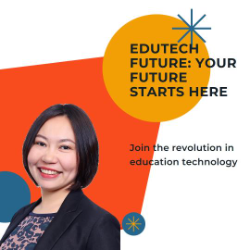
Assel works at the intersection of AI governance, responsible generative AI adoption, and workforce skills transformation. She is affiliate faculty at Singapore Management University, teaching digital transformation, genAI and agentic AI to undergraduate and graduate students. Assel is a partner and AI for Public Sector instructor at the UN's ITU Academy in Geneva, Switzerland - teaching governments responsible AI adoption reaching a community of 85,000 learners. She led the Smart Tech program for the Singapore ministry in 2024 and has been an invited faculty on AI and Cybersecurity custom programs across 25 Kazakhstan government agencies since 2023. In 2025-2026, was a digital transformation trainer and SME business coach on the SkillsFuture Singapore and Boston Consulting Group two RISE programs for senior professionals and SMEs. EDUTech Future's flagship Break into Tech APAC program scored 9.6 out of 10 rating on Maven and reached 70% employability in 2024.
Speaker's Profile:
Jonathan Fung, APAC Head of Global Clients, LinkedIn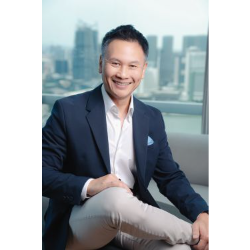
Jonathan is an entrepreneur at heart, driven by a passion for helping global organisations achieve transformative business outcomes through innovation. With 25+ years' experience in finance, startups, and technology, he has honed deep expertise in organisational transformation, strategic partnerships, and change management. His entrepreneurial journey includes founding two successful consulting firms in the U.S. and Hong Kong, specialising in recruitment and business strategy. Before joining LinkedIn, Jonathan held senior regional roles in business development and business assurance. Currently, he serves as the APAC Head of Global Clients at LinkedIn, where he leads strategic partnerships with top Fortune 300 companies. Jonathan holds a bachelor's degree from the USC Marshall School of Business. He serves as Vice Chair of the Board at an Americal international School and is actively involved with the Halogen Foundation, supporting youth leadership development in Asia.
Speaker's Profile:
Tay Gek Peng (gp), Digital Transformation and AI Leader, Transformation Mentor and ex-Chief Digitalisation Officer, Republic of Singapore Air Force, Republic of Singapore Air Force-4ea966ec-4d96-44fc-892f-d9198ed911de.png)
Tay Gek Peng is a former digital and change leader in the RSAF, recognised as a 2024 Global Top 100 Innovator in Data and Analytics. With over 29 years of engineering experience, he pioneered the RSAF's innovation movement in 2017 and digital transformation in 2018, serving as its first Chief Digitalisation Officer in 2022. In 2021, he founded Singapore's first military tech start-up, RAiD, which was formalised by the Ministry of Defence in 2024, with a Harvard Business Review case study published in 2025. An avid learner himself, gp has trained and mentored more than 20 annual cohorts of Air Force Engineers on technology and innovation. Currently, he advises leaders on digital transformation and mentors professionals on change leadership. He is also a writer and keynote speaker, inspiring others to embrace change and innovation in today's digital era, with human in the heart.
Speaker's Profile:
Robert Smith, Director, Education Industry Advisor, Worldwide Public Sector, Asia, Microsoft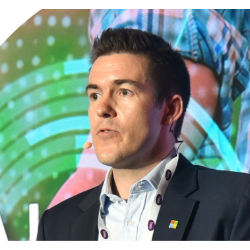
Rob is a seasoned industry advisor with over 20 years of experience leading transformation across the Education and Public Sector. As Director, Industry Advisor for Education, Rob works closely with national ministries, institutional leaders, and policy makers to shape forward-looking strategies that strengthen education systems, promote digital equity, and build institutional resilience. His deep regional expertise - particularly in Southeast Asia - combined with a practical understanding of emerging technologies as AI, enables him to guide leaders in navigating the evolving intersection of policy, pedagogy, and innovation. Rob is a trusted voice in engagements focused on modernising education, fostering public-private collaboration, and unlocking the societal potential of technology.